Veterinary Continuing Education Design: Canine Dysautonomia
Project Overview
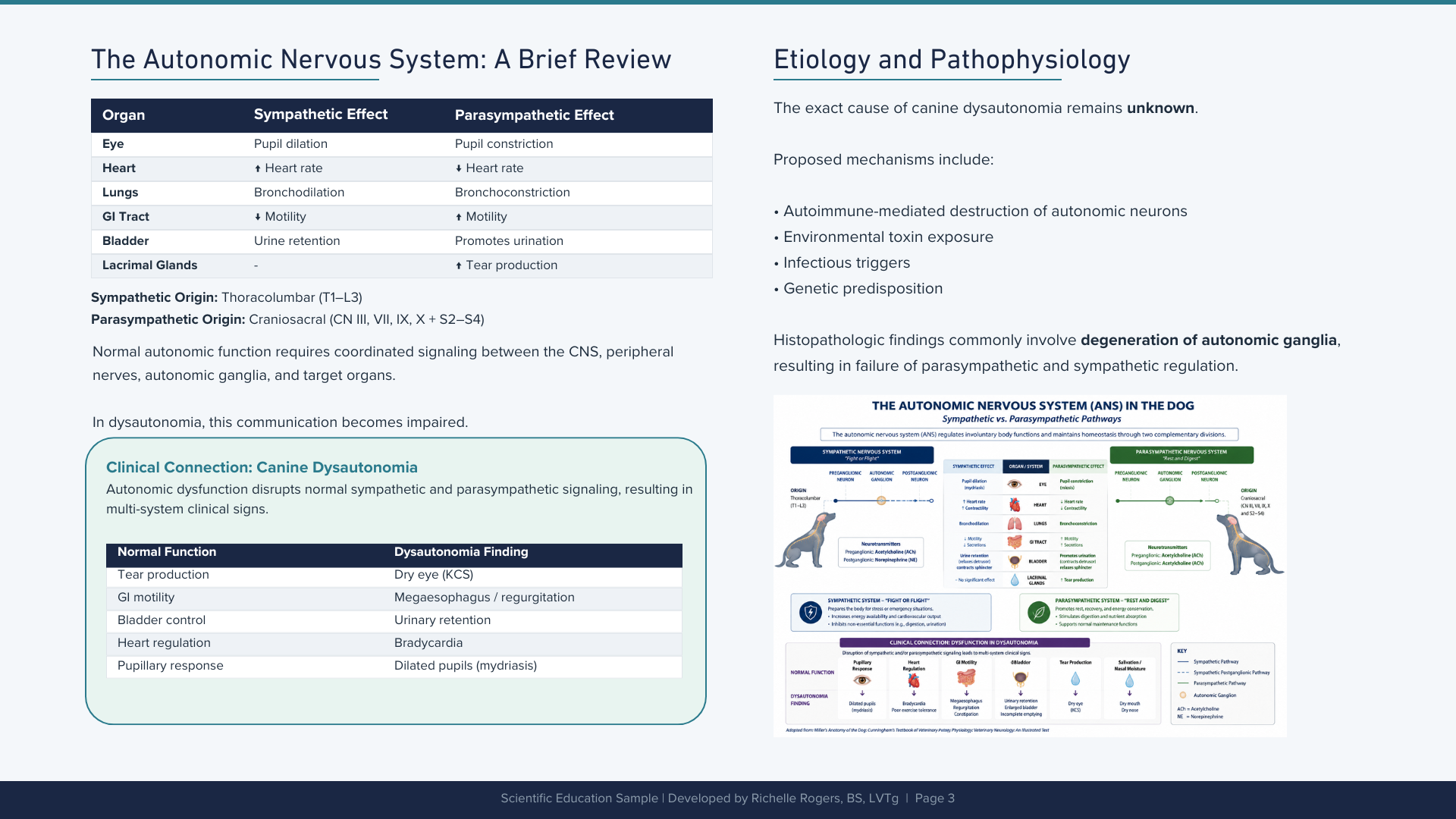
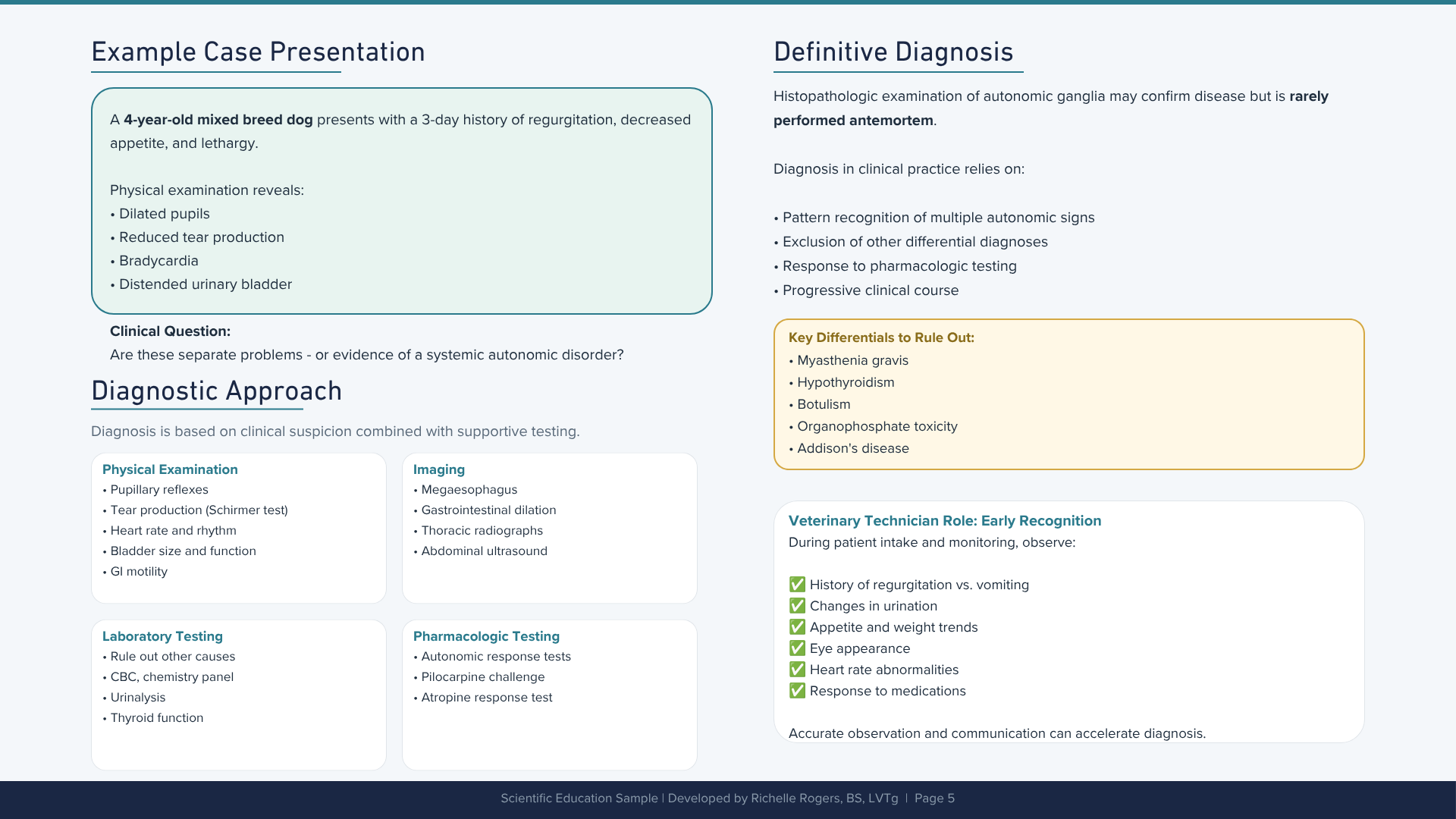
This continuing education resource was developed to support veterinary professionals in recognizing the clinical presentation of canine dysautonomia, a complex neurological disorder affecting autonomic nervous system function. The project demonstrates the design of scientifically accurate, practice-focused learning materials that translate veterinary research into accessible educational content for adult learners.
Learning Need
Veterinary professionals frequently encounter patients with multi-system clinical signs that may initially appear unrelated. This CE resource was designed to strengthen pattern recognition and clinical reasoning by connecting autonomic nervous system dysfunction with observable patient findings.
Instructional Design Approach
Analyze
Audience: Veterinary professionals
Learning level: Intermediate
Domain: Neurology/Internal Medicine
Design
Learning objectives focused on:
Knowledge acquisition
Clinical recognition
Diagnostic reasoning
Workplace application
Develop
Created:
Educational handout
Clinical comparison tables
Case-based learning scenario
Reference-supported content
Evaluate
Learner understanding is assessed through:
Clinical application questions
Pattern recognition exercises
Diagnostic reasoning prompts
Design Reflection
This project reinforced the importance of designing professional education that moves beyond information delivery and supports workplace application. By combining evidence-based content, visual organization, and clinical scenarios, this CE resource was designed to help veterinary professionals recognize patterns, improve communication, and support informed patient care decisions.