VetSelect
A Scenario-Based Hiring Assessment for Veterinary Professionals
The Business Problem
Veterinary hospitals often rely on resumes, interviews, and multiple-choice knowledge exams to evaluate candidates. These methods provide limited insight into how applicants prioritize tasks, communicate with clients, respond under pressure, or make patient-care decisions in realistic clinical situations.
Goal: Design an interactive assessment that measures real-world decision making rather than memorized knowledge.
Needs Analysis
Current written assessments primarily measure factual recall and may not accurately predict workplace performance. Hiring managers require a standardized method to evaluate clinical reasoning, communication, prioritization, and professionalism.
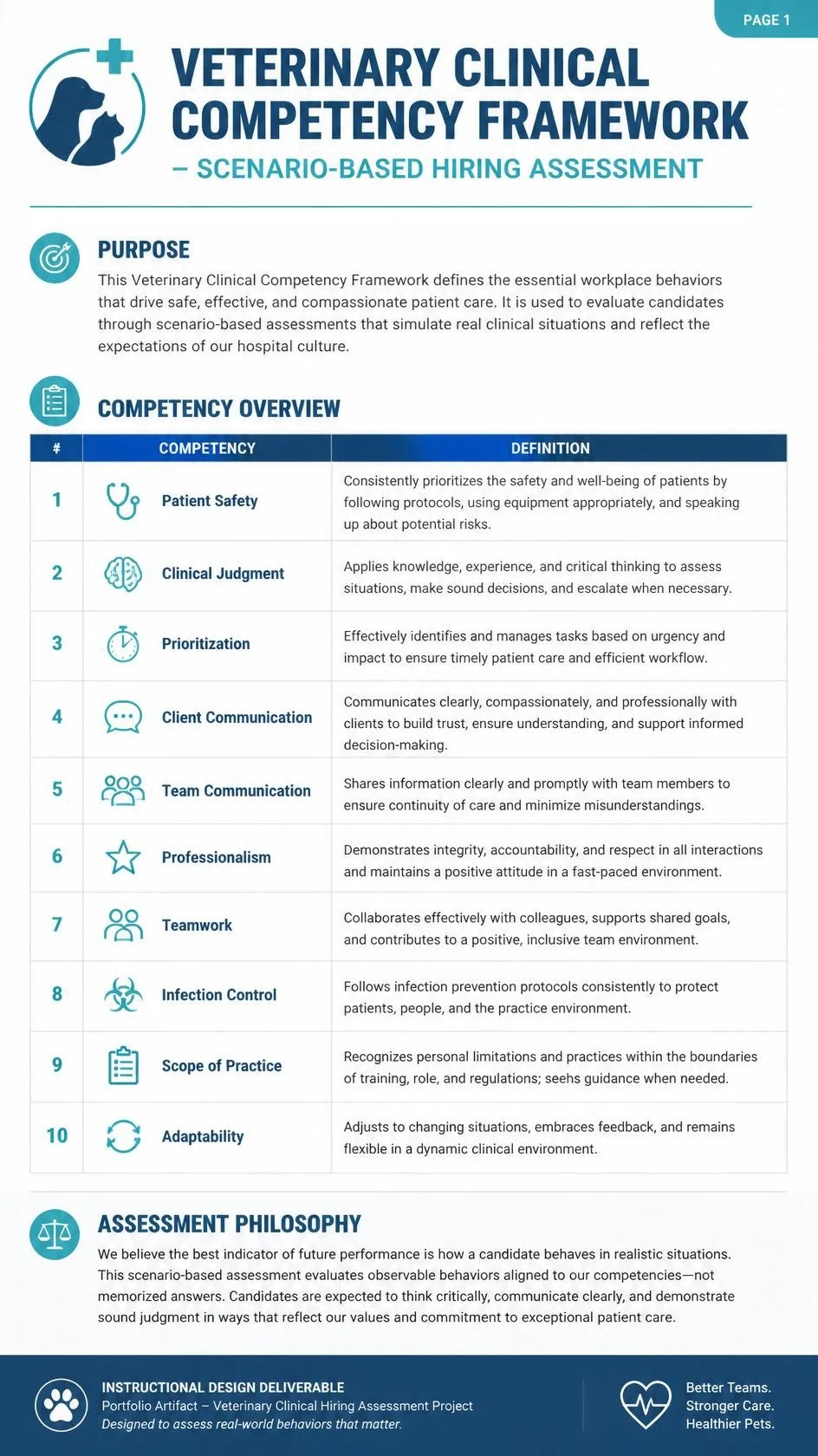
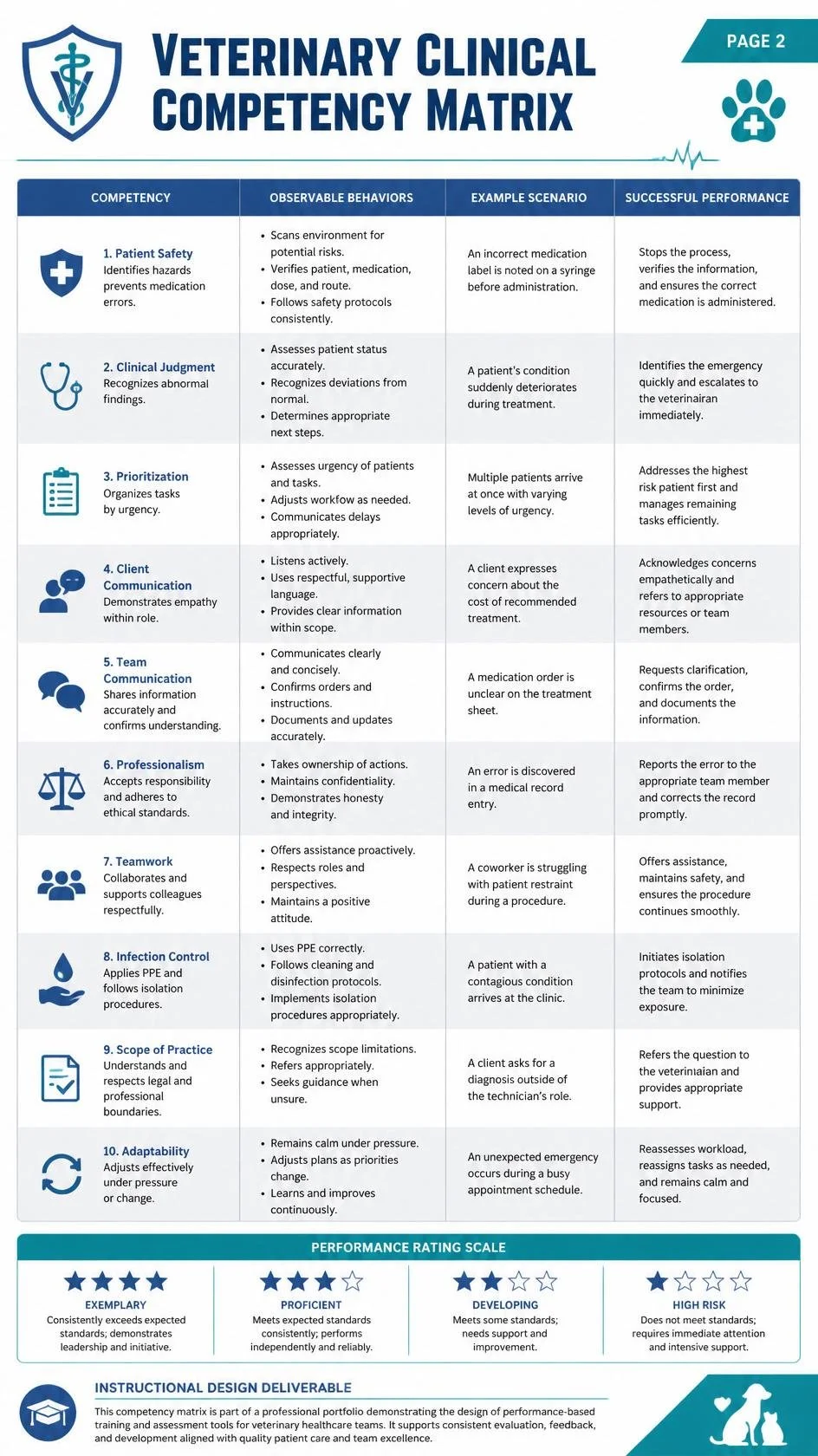
Competency Map
The scenario-based hiring assessment evaluates how veterinary assistant or veterinary technician candidates respond to realistic workplace situations. The assessment focuses on observable behaviors associated with patient safety, clinical judgment, communication, professionalism, teamwork, and workflow management.
The assessment is not intended to replace a hands-on clinical skills evaluation. Instead, it measures how candidates interpret information, prioritize actions, communicate concerns, and make decisions in common veterinary hospital situations.
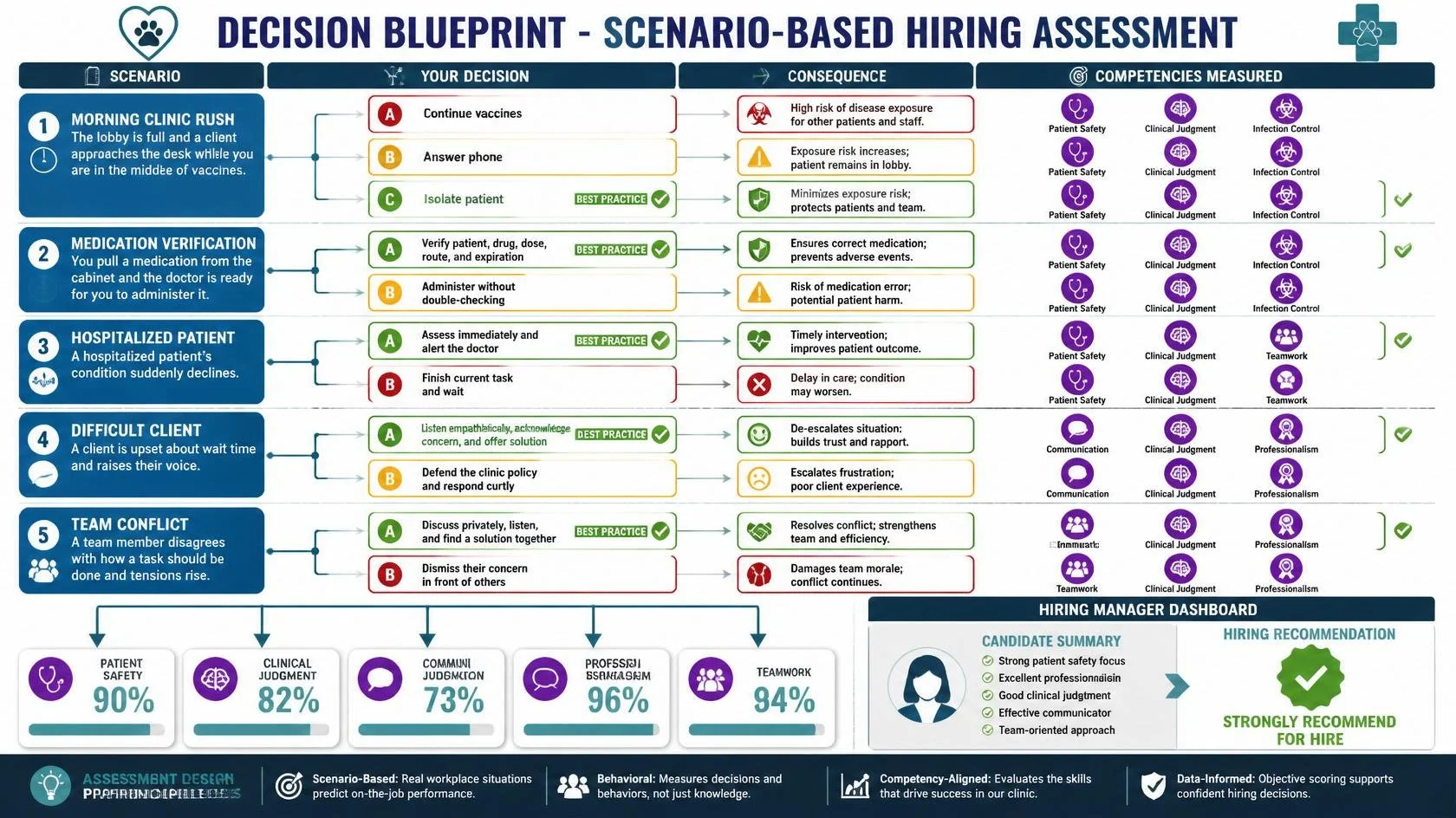
Decision Blueprint
The Decision Blueprint serves as the assessment's design map, illustrating how learning and performance objectives align with scenario-based decision points and competency measurement. Each branching pathway was intentionally designed to elicit observable workplace behaviors that mirror authentic veterinary practice. Candidate responses are evaluated against predefined competency indicators, producing meaningful performance data that extends beyond traditional right-or-wrong testing and supports more informed hiring decisions.
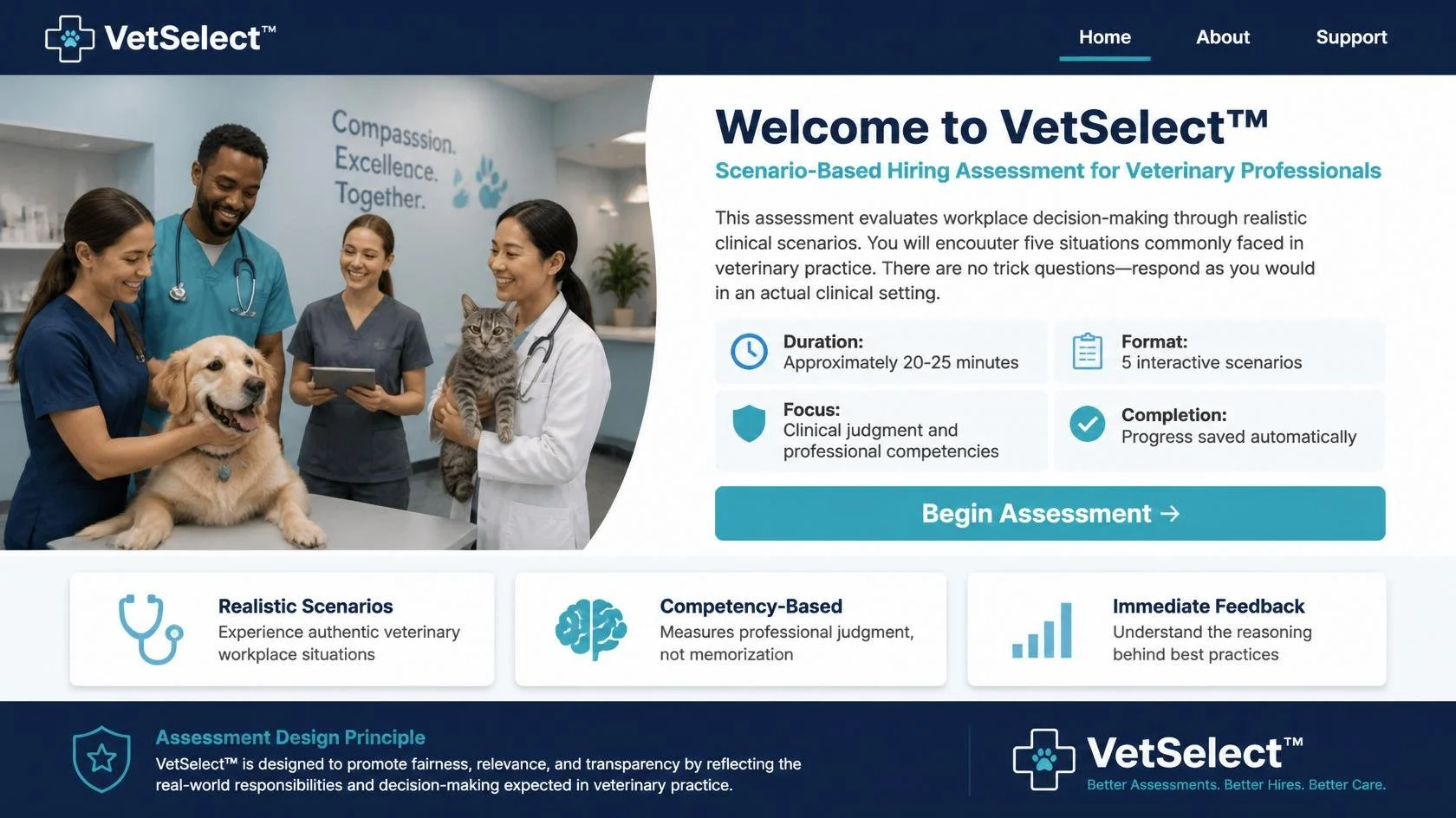
Interactive Assessment Prototype
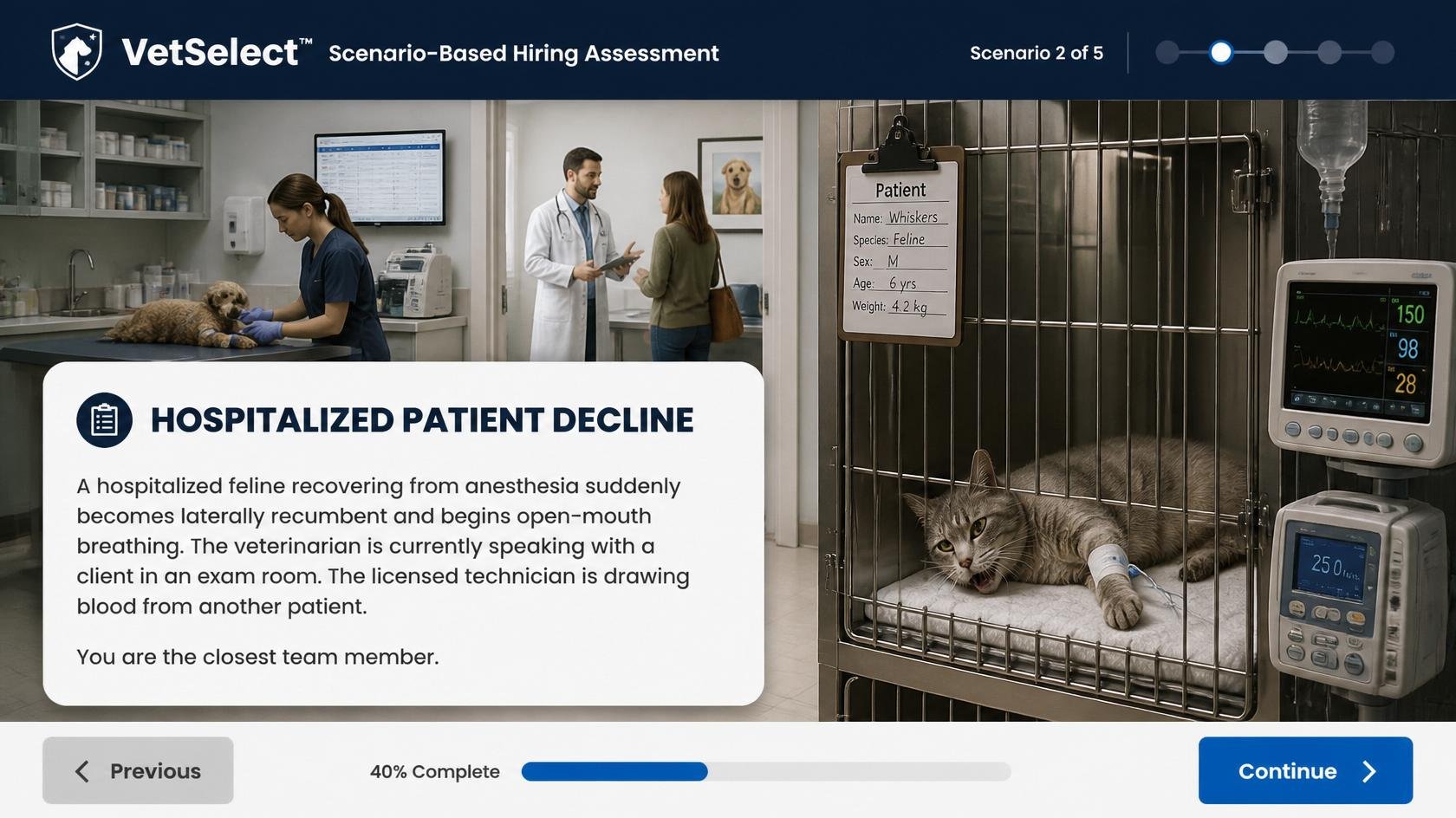
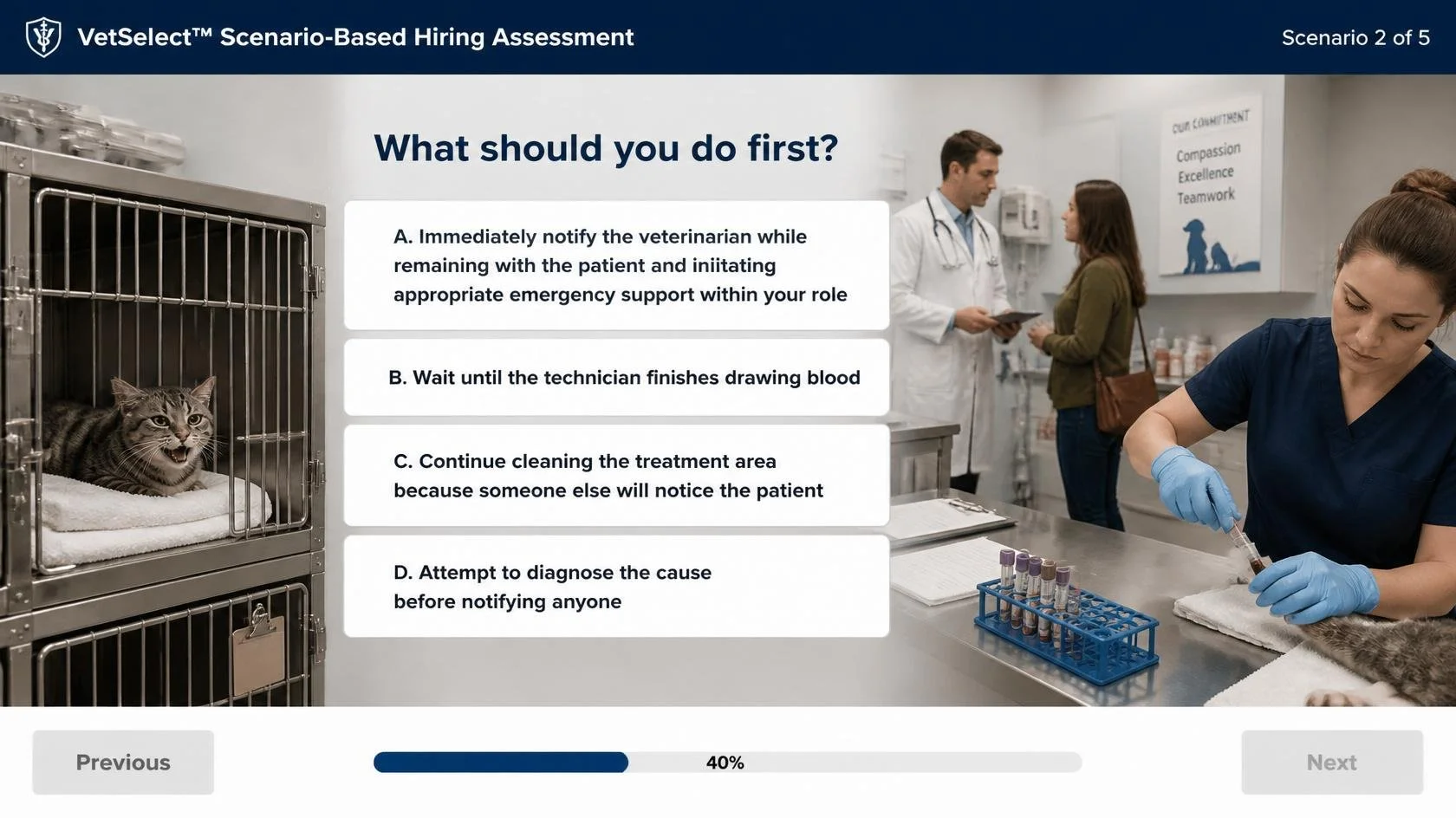
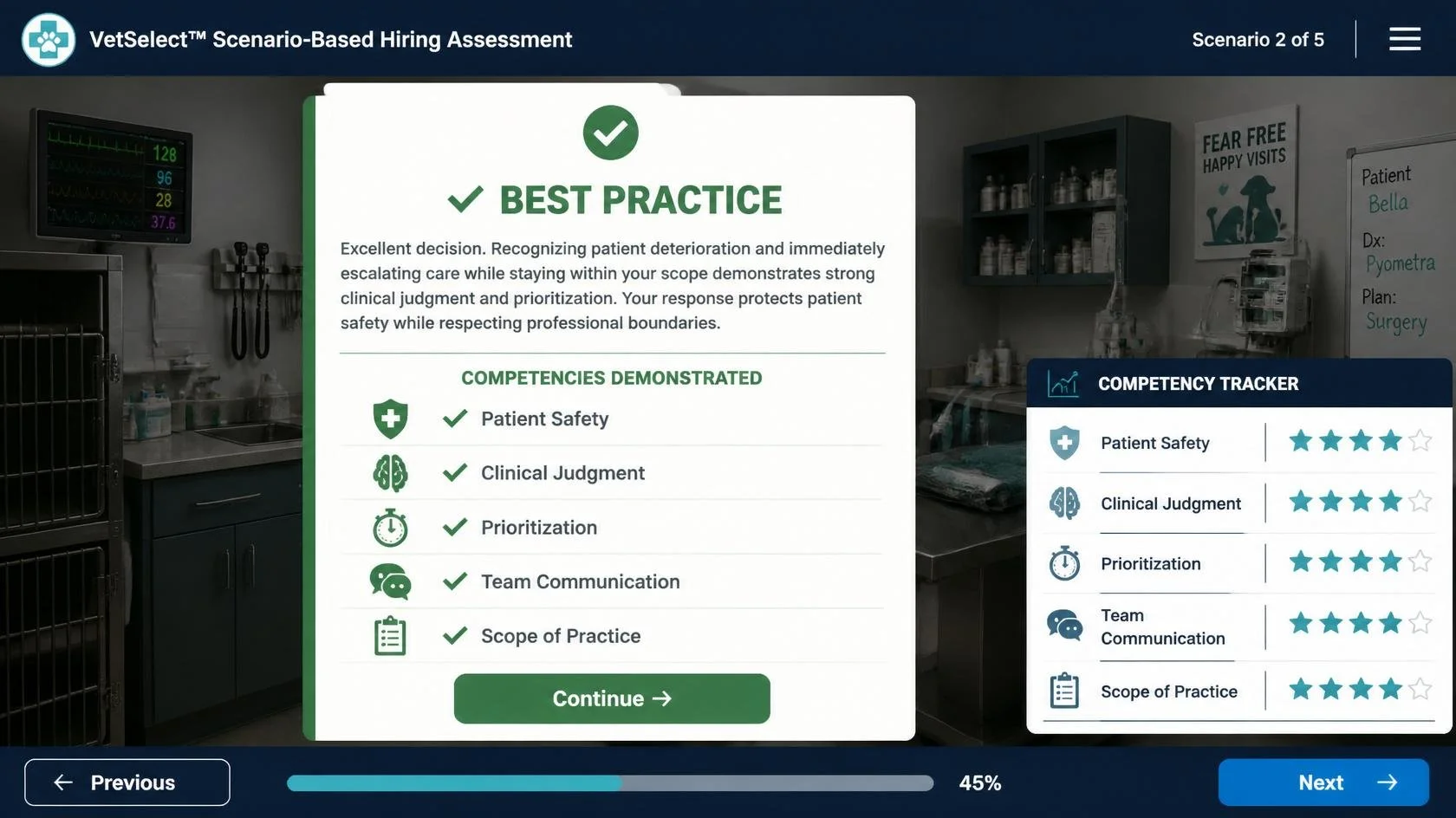
The following prototype screens illustrate the learner experience within the scenario-based hiring assessment. Developed as a high-fidelity Articulate Storyline concept, the assessment immerses candidates in authentic veterinary workplace scenarios that require clinical reasoning, prioritization, communication, and professional judgment. Rather than measuring factual recall, each interaction captures evidence of workplace competencies through realistic decision-making and immediate consequence-based feedback.
Design Decisions
This assessment was intentionally designed using principles of authentic assessment and scenario-based learning to evaluate workplace performance rather than factual recall. Each clinical scenario mirrors situations commonly encountered in a small animal veterinary practice, requiring candidates to prioritize patient safety, communicate effectively, and exercise professional judgment under realistic conditions.
Several key instructional design decisions guided the development of this prototype:
Authentic scenarios replaced traditional multiple-choice questions to improve contextual relevance.
Branching decision pathways allow candidates to experience realistic consequences while generating measurable competency data.
Immediate feedback reinforces safe clinical reasoning without interrupting assessment flow.
Competency-based scoring provides hiring managers with meaningful insights into behavioral performance instead of a single knowledge score.
Reflection
Developing this concept challenged me to think beyond instructional content and consider assessment as a tool for improving organizational performance. Rather than asking, "What should candidates know?", I focused on the more meaningful question, "What decisions should successful employees be able to make?"
This shift resulted in an assessment centered on observable workplace behaviors that better reflect the realities of veterinary practice. The project reinforced the importance of aligning assessment strategies with measurable performance outcomes and highlighted how instructional design can support hiring decisions through authentic evaluation.
Future Enhancements
If developed into a production-ready assessment, future iterations could include:
Adaptive branching that presents increasingly complex scenarios based on candidate performance.
Role-specific assessment pathways for Veterinary Assistants, Licensed Veterinary Technicians, and Veterinary Students.
Integrated competency dashboards for hiring managers.
Benchmark reporting to compare candidate performance across competency domains.
LMS integration for automated reporting and data collection.
Validation studies to evaluate assessment reliability and predictive value for on-the-job performance.