Small Animal Anatomy & Physiology Course Redesign
Transforming a traditional content-heavy course into a scaffolded, learner-centered curriculum for veterinary assistant students.
Project Overview
This project reimagines a traditional Small Animal Anatomy & Physiology course into a learner-centered, scaffolded learning experience for veterinary assistant students. Rather than presenting body systems as isolated units of memorization, the redesigned curriculum intentionally builds foundational knowledge through a logical progression—from cellular biology and tissues to organ systems and clinical application. Grounded in instructional design principles, the course emphasizes clear learning objectives, consistent module structure, active learning opportunities, formative assessments, and authentic veterinary scenarios that help students connect anatomical concepts to real-world practice. The result is a comprehensive 16-week course designed to improve learner engagement, knowledge retention, and readiness for clinical settings while demonstrating a systematic approach to curriculum design.
The Challenge
The original course emphasized memorization of isolated body systems, leaving students struggling to connect foundational biological concepts to later clinical applications. Students often reached complex topics without a strong understanding of cell biology, tissue organization, or anatomical terminology.
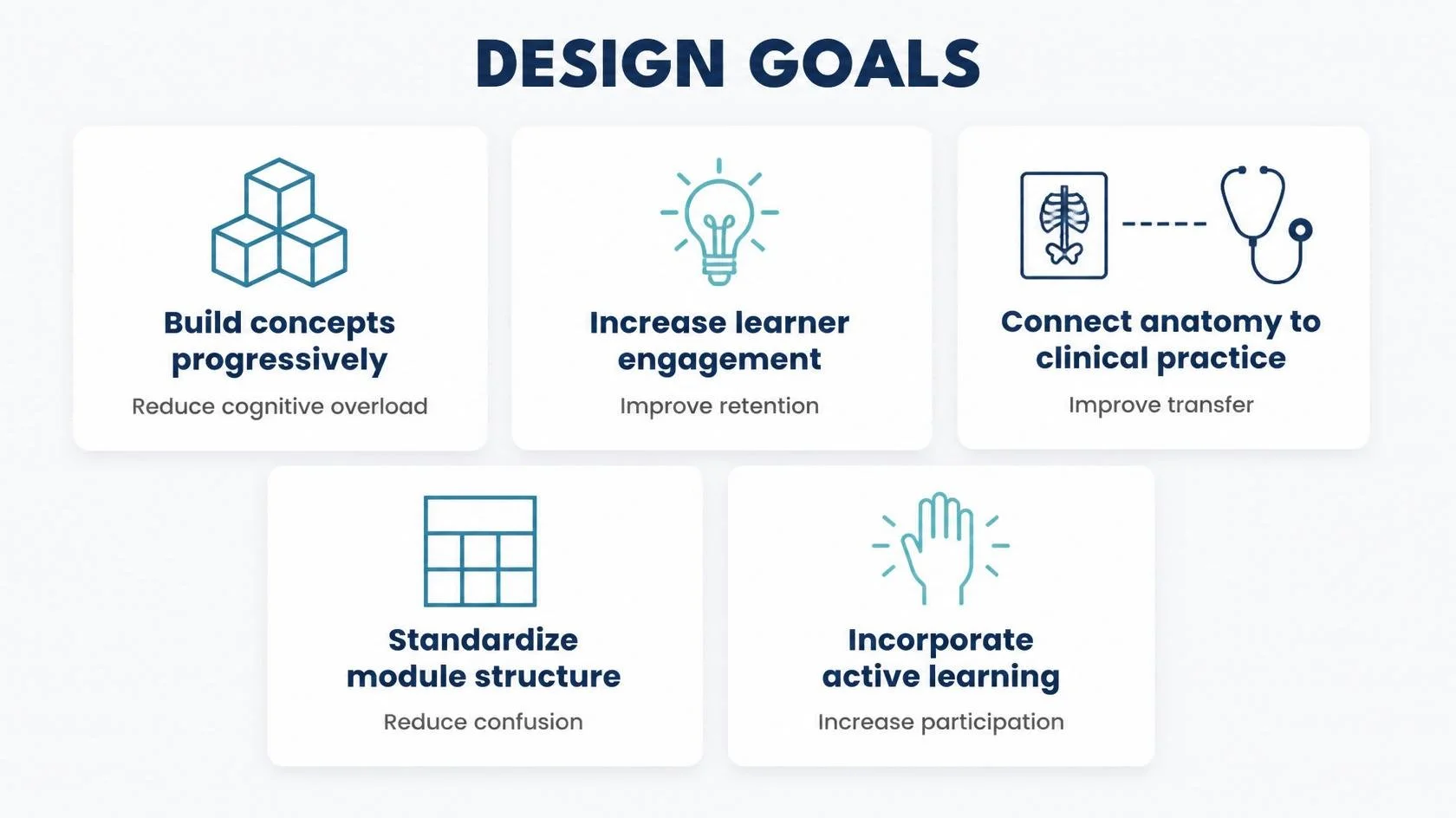
Design Goals
The redesign was guided by a learner-centered approach focused on improving comprehension, engagement, and long-term knowledge retention. Each design decision was made intentionally to reduce cognitive overload, create a logical progression of content, and better prepare students to apply anatomical and physiological concepts in clinical veterinary settings. The following goals served as the foundation for every aspect of the course redesign, from curriculum sequencing to assessment design and learning activities.
Design Process
The course redesign followed a structured instructional design process to ensure every component aligned with the intended learning outcomes. Beginning with an analysis of learner needs and curriculum gaps, the course was systematically rebuilt through intentional content sequencing, measurable learning objectives, consistent module design, authentic assessments, and interactive learning experiences. Each stage informed the next, resulting in a cohesive, learner-centered curriculum that promotes engagement, knowledge retention, and clinical application.
Curriculum Roadmap
The redesigned curriculum was intentionally sequenced to support progressive concept building, ensuring students establish a strong scientific foundation before tackling increasingly complex body systems. The course begins with core principles of cellular biology and tissue organization, then systematically introduces each organ system in an order that reinforces anatomical relationships and physiological function. By concluding with clinical integration and comprehensive review, students are encouraged to synthesize their knowledge and apply it to authentic veterinary scenarios, promoting deeper understanding and long-term retention.
Module 1: Foundations of Biology
Module 1 exemplifies the instructional design approach used throughout the course redesign. During the curriculum analysis, I identified that foundational concepts in cell biology and physiology were largely absent from the original course, requiring students to learn complex body systems without first understanding the cellular processes that drive normal function. To address this gap, I designed a new introductory module that establishes essential biological principles before progressing to anatomy and organ systems. Through scaffolded lessons, active learning activities, authentic assessments, and a clinical case study, the module equips students with the foundational knowledge needed to support deeper understanding and long-term retention throughout the remainder of the course.
Key Design Takeaways
Scaffolded Learning
Built foundational knowledge before introducing complex organ systems to support long-term retention.
Authentic Application
Integrated veterinary case studies and scenario-based activities to connect scientific concepts to clinical practice.
Alignment
Ensured learning objectives, instructional activities, and assessments were intentionally aligned throughout the course.
Reflection
This redesign reinforced the importance of sequencing, alignment, and intentional learning design. Rather than simply reorganizing content, I restructured the curriculum to address gaps in foundational knowledge, reduce cognitive overload, and create meaningful connections between anatomy, physiology, and clinical practice. Every instructional decision—from the introduction of cell biology to the integration of authentic assessments—was made to improve learner understanding and better prepare students for real-world veterinary settings.